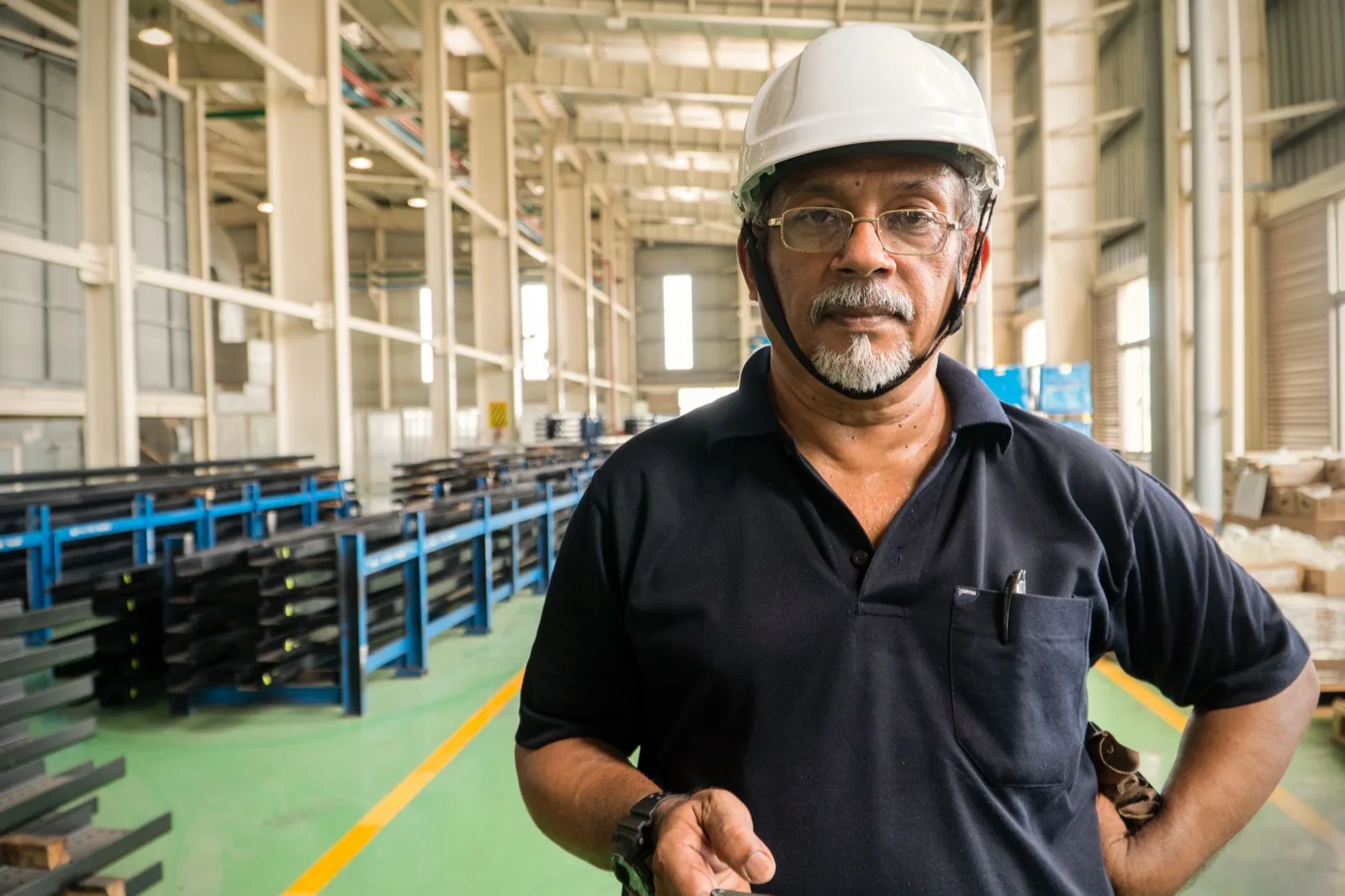
A factory photo and video shoot is one production that leaves the client, typically a manufacturer, with both a set of photographs and a finished film. Both output types are captured on the same days, by the same crew, from the same shot list. Most manufacturing companies do not commission the work that way. Photography gets booked when the website is being rebuilt, the facility film gets commissioned a year later for a tender or a funding round, and the two sets of images often look quite different, typically with one showing more wear and use.
Booking both together is not simply cheaper, although the saving is real. The larger gain is that a single brief produces one visual account of the plant. This post explains what changes when stills and film (video) come out of one visit: the planning, the shooting days themselves, the unexpected constraints, and the cases where two separate visits are the better choice. Having said that, running both shoots simultaneously is not easy, and some sacrifices have to be made. When those sacrifices cost too much, we split the two onto different days of the same production schedule.
Factory Photo and Video Shoots Share One Recce, One Induction and One Shot List
Almost everything expensive about a factory shoot happens before the first frame. Someone has to walk the site, agree what will be photographed, understand which lines run on which shift, sit through the safety induction (if any), arrange PPE, clear the visitor paperwork, and work out where a tripod can and cannot be used. A recce at a steel plant costs the same whether the crew returns with cameras, with cinema kit, or with both. So why not do both?
Commissioning photography and film separately pays for that groundwork twice. The second crew repeats the induction, relearns the floor plan, and re-negotiates access with a plant manager who has already given up a morning once. Worse, the second crew makes different choices: a different angle on the main line, a different time of day, a different idea of which machine matters. The photographs and the film end up disagreeing about what the factory should look like.
Doing both in one production removes the duplication of effort. The recce, the safety induction, the escort, the access permissions and the shot list are all done once, and the shot list is built knowing both outputs are coming. That last point is the one that matters most. A shot list written for photographs alone will not contain the sequences a film needs, and a list written for film alone will not contain the clean, composed frames a brochure needs.
What a Factory Tour Video Shows That Photographs Cannot
Photographs and film explain different things about a plant, which is why serious manufacturers end up needing both.
A photograph is the better tool for scrutiny. A buyer studying a wide facility view is reading housekeeping, floor markings, stock discipline and equipment age, and a still image lets that buyer look for as long as the decision deserves. Photographs also survive being cropped into a brochure, blown up on a trade-show wall, pasted into a tender document and sized down for a website, all from one capture.
A video is often the better choice for persuasion. Motion shows a process working: the press cycling, the line indexing, the operator’s hands doing the skilled thing the photograph can only imply. Film also carries voices. A thirty-second piece of a plant head explaining the quality regime does work that no photograph does, which is why facility showcase films run three to six minutes and are cut down to sixty- and ninety-second versions for social media and trade shows.
Our industrial video work in Chennai has covered steel plants across Tamil Nadu, processing facilities, manufacturing lines and export operations for clients including Jeppiaar Furnace & Steels, MS Global India, Besmak, Alliance Minerals and Viari Exports. In practice the facility film and the photograph set end up serving different people inside the same client’s organisation: the sales team wants the film, the marketing team wants the photographs, and the investor deck uses both.
Factory Photo and Video Shoots Need a Different Day Plan
Running both disciplines in one visit is not just a matter of bringing a second camera. The day itself has to be structured differently, and the equipment list changes too, so Chennai companies planning a combined shoot should know exactly what that entails.
Stills and motion want opposite things from a subject. Photography wants a machine held at its best moment: the guard positioned, the operator’s hands placed, the frame composed and then locked. Film wants the same machine running uninterrupted for long enough to cut a sequence. Attempting both simultaneously produces compromised versions of each, so a combined shoot works station by station instead. The crew arrives at a line, films the process running for as long as the sequence needs, then stops and photographs the same station properly. One setup of lighting and access serves both passes, and we plan the day that way from the start.
That sequencing is why a combined production runs longer than a photography-only shoot but much shorter than two shoots. A facility that takes one to two days to photograph typically takes two to three days (sometimes more) when a film is captured alongside. The extra day is needed for the motion sequences, the interviews and the b-roll.
Lighting carries across, which is the quiet efficiency in the arrangement. Factory lighting is mixed, dim and unflattering for both media, and the work of bringing controlled light to a machine and managing colour across sodium, LED and daylight sources is equally challenging whether recording one frame for a photo, or thirty per second for video. We covered why factory light behaves that way in the earlier piece on how to photograph a working factory.
In fact, photography can often be simpler because factory lights can be overpowered with flashes, and images can be retouched. Not so with video, where it’s often hard to overpower the harsh, strong lights from factory floods. This is why the recce is so important. Our equipment list changes according to these factors, among others.
Sound Is the Constraint Nobody Expects
The single largest surprise for first-time clients is that adding film adds a sound problem, and a factory is a hostile place for recording sound, for several reasons. A production line running at full volume makes a spoken interview unusable, so interviews get recorded in a quieter room, during a break, or before a shift starts. None of that is difficult, but all of it has to be scheduled, and a manufacturer who discovers the requirement on the morning of the shoot loses hours finding a room and a willing speaker.
Decide three things well before shoot day. First, whether the film will have interviews at all, because a facility showcase can work on voiceover alone. Second, who speaks, which is a decision for the leadership team and not for the crew. Third, where and when those conversations happen, in a room away from the shop floor, with the air conditioning switchable. Our factory preparation checklist covers the rest of the client-side groundwork, from machinery touch-ups to what the team should be wearing.
What Clients Receive When the Combined Production Wraps
A combined production delivers two distinct sets of assets from one commissioned job.
On the photography side:
- Wide facility views for investor decks and trade-show walls
- Machinery photographs lit to show engineering rather than shadow
- Process and people images for about pages and recruitment
- Product-in-production frames that give the manufacturer a provenance story
Final files are delivered as high-resolution JPEG and TIFF files sized as needed.
On the film side, we often provide:
- A facility showcase of three to six minutes for the website, tenders and investor presentations
- Cuts of 60 to 90 seconds, edited from the same production, for social media and trade-show loops
- Individual process or machinery clips for technical sales conversations
Leadership portraits usually get added to the same visit, because a plant head who has already blocked out shoot days is far easier to photograph then than on any other week. However, leadership portraits are best treated as a nice-to-have rather than a requirement. Portraits are part of our corporate photography services, and the corporate video production process post explains how interviews and cutaways are assembled once filming is done.
When Two Separate Visits Make More Sense
A combined photo and video shoot is not automatically the correct choice, and pretending otherwise would waste a manufacturer’s money. Very often, scheduling photography and video on separate days of the same production run works better. Occasionally the two belong in entirely separate productions, and that happens more than clients expect.
Two visits are the better plan in three situations. When the plant is mid-expansion and a new line commissions in a few months, photograph the facility now for the immediate website need and film once the floor is finished. When the film’s purpose has not been decided, because a facility showcase, a recruitment piece and an investor AV are genuinely different productions, and filming before the purpose is settled produces footage nobody uses. And when the photography is urgently needed, since a film adds pre-production time that a deadline may not allow.
Everywhere else, and particularly for multi-site manufacturers, one combined production across every facility is the arrangement that keeps the images consistent. When four plants appear side by side in an investor presentation, the images need to look like one company rather than four different vendors.
If your facility is due for photography, film, or both, message +91 99624 28747 on WhatsApp with the site location and what the images need to achieve. We will come back with a scope and a clear quote, usually within a working day. Full details of the photography side are on the industrial photography page.